


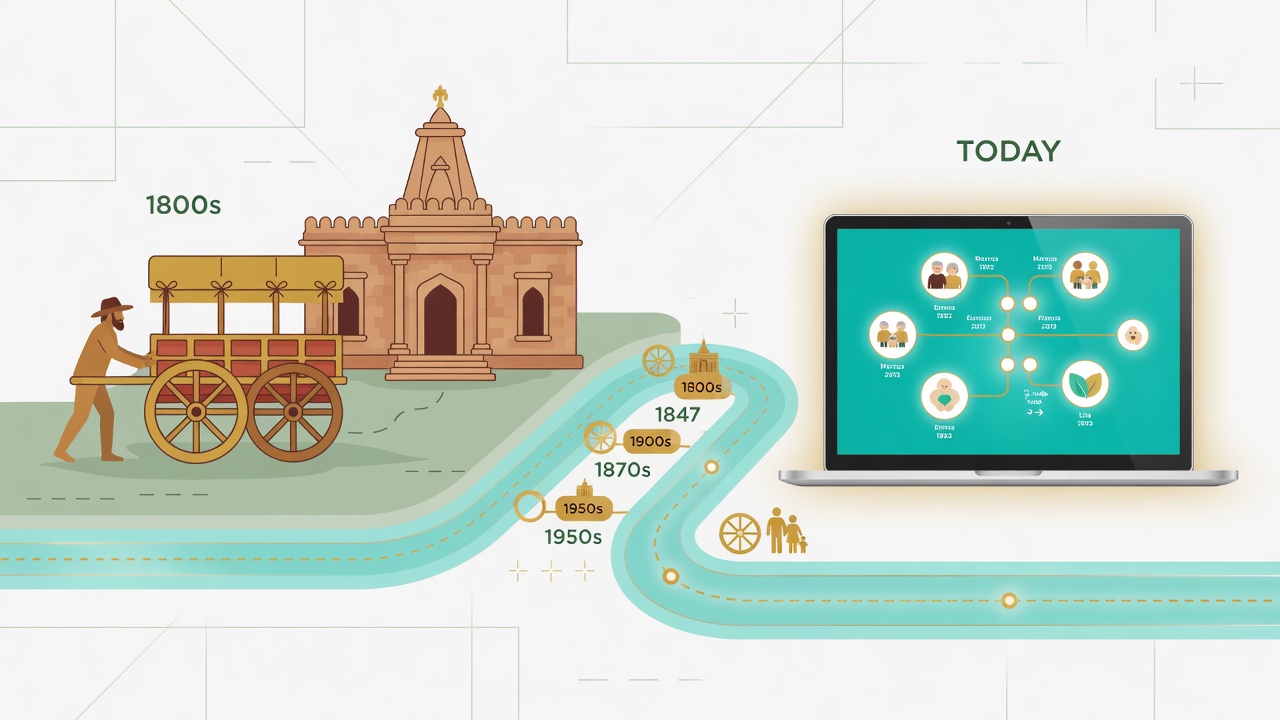
Have you ever wondered how the sacred practices of the Church developed over the last two centuries? Understanding the timeline of temple events reveals a beautiful, step-by-step restoration of eternal truths. This incredible journey shows how small, simple beginnings grew into a massive, worldwide effort to gather Israel on both sides of the veil.
The embedded document below provides a masterful, comprehensive timeline of these historical milestones. It traces the exact progression of sacred ordinances from the early 1830s all the way to modern digital innovations. By studying this history, you will gain a profound appreciation for the sacrifices made by early members and the technological miracles of our day.
The Early Days of the Restoration
The timeline of temple events begins long before any official buildings were completely constructed. In 1831, early members were promised that they would eventually be endowed with power from on high. A preliminary form of this endowment occurred when men were ordained to the High Priesthood, which bestowed essential authority.
In 1832, washings and anointings were performed as part of the School of the Prophets inside the Newel K. Whitney Store in Ohio. The Kirtland Temple was later dedicated in 1836, serving primarily as a place for sacred meetings and heavenly visitations. However, no ordinances for the dead were performed there, as those specific ceremonies had not yet been revealed to the Prophet.
While the original building at Kirtland was eventually abandoned by the early Saints, it has an incredible modern postscript. It was miraculously purchased by the LDS church in March 2024, along with significant Nauvoo properties and historical artifacts.
The First Vicarious Ordinances
The doctrine regarding the salvation of the dead was finally fully revealed in 1840. This glorious truth was first mentioned publicly when Joseph Smith preached at the funeral sermon of Seymour Brunson. Shortly after, the very first proxy baptisms were performed directly in the waters of the Mississippi River.
The work quickly moved indoors when baptisms for the dead officially began inside the Nauvoo Temple in November 1841. Joseph Smith later performed the first live full endowments and marriage sealings in the upper room of his Red Brick Store in 1842. As persecution heavily increased, the Saints worked tirelessly to finish the Lord’s house before fleeing the city.
By late 1845, thousands of early Saints were receiving their endowments in the attic of the Nauvoo Temple, preparing them spiritually for their arduous trek west.
Moving West and the Endowment House
After the Saints arrived in the Salt Lake Valley in 1847, the sacred work continued without a dedicated building. Endowments were temporarily given outdoors on top of Ensign Peak. In 1855, the Endowment House was completed in Salt Lake City, becoming the site for the very first sealings of couples for the dead.
This temporary structure served a massive purpose for several decades. Thousands of outgoing missionaries received their necessary instruction and washings within its walls. Over 54,000 members received their living endowments in the Endowment House before it was eventually closed.
St. George and Expanding the Work
The dedication of the St. George Temple in 1877 marked a massive turning point for temple events. It was here that the very first endowments for the dead were finally performed. Furthermore, vicarious ordinances were officially expanded, allowing members to perform work for people far outside of their own direct family lines.
Also in 1877, a beautiful and significant change occurred regarding eternal marriage. Women began being sealed directly to their own spouses, rather than to prominent church leaders, fulfilling a newly revealed clarification on the law of adoption.
Modern Digital Family History Tools
As the church grew rapidly, maintaining precise records of these temple events required incredible technological innovation. In 1927, an alphabetical card file known as the Temple Records Index Bureau (TIB) was created to index all completed endowments. This was later followed by the first major computer system, famously identified by the acronym GIANT, in 1969.
That same year, the International Genealogical Index (IGI) was created to help track worldwide temple work. In 1999, the internet revolutionized this work completely with the launch of FamilySearch.org, which now holds billions of searchable records.
By 2025, Artificial Intelligence was instituted to greatly expand the number of searchable names and drastically improve indexing speed. Please explore the fascinating 15-page document below to view the entire chronological timeline of these incredible historical milestones!
