


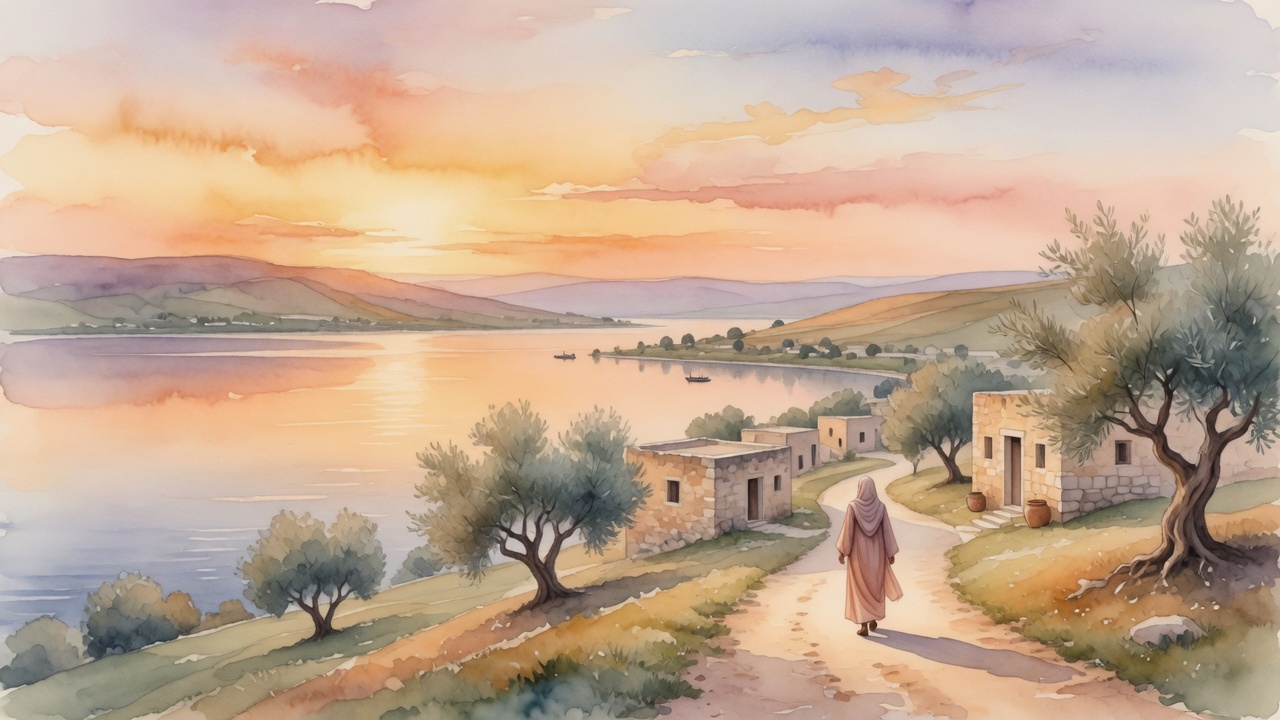
Have you ever wondered what it was actually like to walk the dusty roads of Galilee in the first century? When we study the life and times of Jesus, it is incredibly helpful to understand the historical context of His mortal ministry. He did not live in a vacuum; He lived in a vibrant, complex, and politically tense society.
The embedded document below offers a fascinating look into the social, cultural, and political landscape of ancient Israel. It covers everything from daily diets and childhood games to the massive political pressures of the era. By understanding these historical details, your personal scripture study will come alive like never before.
The Geography and Demographics of Israel
When studying the life and times of Jesus, many people are surprised by the actual physical size of Israel. It was a relatively small area, yet it held an estimated population of 500,000 to 600,000 people during Christ’s ministry. This made the region quite densely populated, especially around the Sea of Galilee.
Jesus spent His life moving between distinct regions like Galilee, Samaria, and Judea. He was raised in the small, obscure village of Nazareth, but later made the bustling fishing town of Capernaum the headquarters of His ministry. Of course, the massive city of Jerusalem remained the religious and political epicenter of the entire Jewish world.
Daily Life, Languages, and Professions
What was daily life like for the Savior and His chosen disciples? The common language spoken by the everyday people was Aramaic, though Hebrew was used in the synagogues and Greek was the language of commerce. Life spans were remarkably short compared to today, making family and community bonds incredibly important for survival.
The daily diet consisted heavily of simple, local foods like bread, fish, olives, grapes, and figs. As for His profession, Jesus and His earthly father Joseph were known as carpenters or builders. They likely worked with both wood and stone, performing heavy, physical labor to support their family.
Even children had their own distinct culture in the ancient world. They played games in the marketplaces, mimicking weddings and funerals, which Jesus Himself directly referenced in His parables. It was a rich, deeply traditional society.
The Harsh Reality of Roman Oppression
You cannot fully grasp the life and times of Jesus without understanding the heavy burden of Roman rule. The Jewish people were severely oppressed by the Roman Empire, suffering under heavy taxation and brutal military occupation. They desperately wanted to be entirely free from this pagan oversight.
Because of this intense suffering, the people were desperately looking for a “new king” or a political Messiah who would overthrow Rome. This helps explain why so many citizens misunderstood the Savior’s true mission. He came to offer spiritual liberation from sin and death, not political liberation from Caesar.
The Condescension and Divine Mission
Before He was ever born in Bethlehem, Jesus Christ was the great Jehovah of the Old Testament. The very name “Jesus” carries profound meaning, translating to “Yahweh saves” or “the Lord of salvation.” Furthermore, the title “Christ” is simply the Greek equivalent of the Hebrew word “Messiah.”
The document beautifully explains the “condescension of God,” which means He willingly left His throne divine to experience mortal pain and suffering. While on earth, Christ strictly followed the Gospel of God to assure His own individual exaltation, setting the perfect example for us. He uniquely possessed the attributes necessary to be the atoning one, combining mortality from Mary with immortality from God the Father.
Prophecies Across the Standard Works
The arrival of the Savior was not a secret; it was prophesied extensively by ancient prophets. The Old Testament is filled with types, shadows, and direct prophecies of His birth and suffering. Similarly, the Book of Mormon provides an incredibly clear, secondary witness of His divine role and eventual visit to the Americas.
Furthermore, the Pearl of Great Price reveals that Abraham and Moses saw Jesus chosen from the very beginning of the world. The Joseph Smith—Matthew translation also details His prophecies regarding the Second Coming. Please take some time to read through the fascinating 11-page document below to deeply enrich your study!
